Mortgage lending continues to shift toward mobile-native technology as lenders look for ways to stay responsive, reduce operational friction, and meet rising borrower expectations. For many years, origination workflows were closely tied to desktop systems, local hardware, and physical office environments. As mobile use has grown across other financial services, lenders are increasingly evaluating how mobile tools can support faster decisions, greater flexibility, and consistent access to pricing and loan data.
Mobile loan locking is emerging as an important capability within this evolution. By placing core origination functions directly on an originator's mobile device, mobile-native applications may help organizations streamline workflows and reduce dependency on workstations. This can support more efficient operations and a stronger borrower experience while continuing to rely on the same secure infrastructure that underpins desktop activity.
To understand how mobile loan locking fits into a broader modernization strategy, it helps to examine the functionality, security, and control structure available with native mobile applications and how lenders can incorporate these tools into their existing workflows.
Why Mobile Matters in Mortgage Lending
Borrowers expect immediacy when evaluating rates, selecting products, and moving through the origination process. Traditional desktop-based workflows may slow down decision-making, especially when originators are away from their primary workstation or working outside normal office hours. Mobile workflows can support faster execution by enabling access to the loan pipeline, pricing, and locking directly from a smartphone.
Industry trends indicate that originators continue to rely heavily on mobile devices for communication, scheduling, and information retrieval. Mobile tools that integrate with the broader mortgage ecosystem can also help lenders keep pace with borrower expectations. With the Optimal Blue mobile app, capabilities such as viewing the pipeline, running pricing, reviewing eligibility, and submitting lock requests can take place while maintaining borrower engagement. This may help reduce delays and create a more flexible path from application to lock.
Mobile loan locking also aligns with broader operational goals. Lenders often seek ways to reduce dependence on physical environments, support distributed teams, and enable faster responses during volatile market conditions. Mobile access to pricing and locking may contribute to these goals by ensuring originators can respond whenever borrower needs arise.
Lock Loans Anytime, Anywhere
Mobile Locking is available in the Optimal Blue mobile app, putting originators in control anytime, anywhere. With the Optimal Blue mobile app, users can access their live LOS pipeline, update loan details, run pricing, and lock loans directly from their device. This may help eliminate delays, improve the borrower experience, and keep originators productive on the go. Mobile Locking is designed to be secure, fast, and included at no extra cost for Optimal Blue PPE users.
To explore Mobile Locking functionality in more detail, you can review the Mobile Locking innovation sheet.
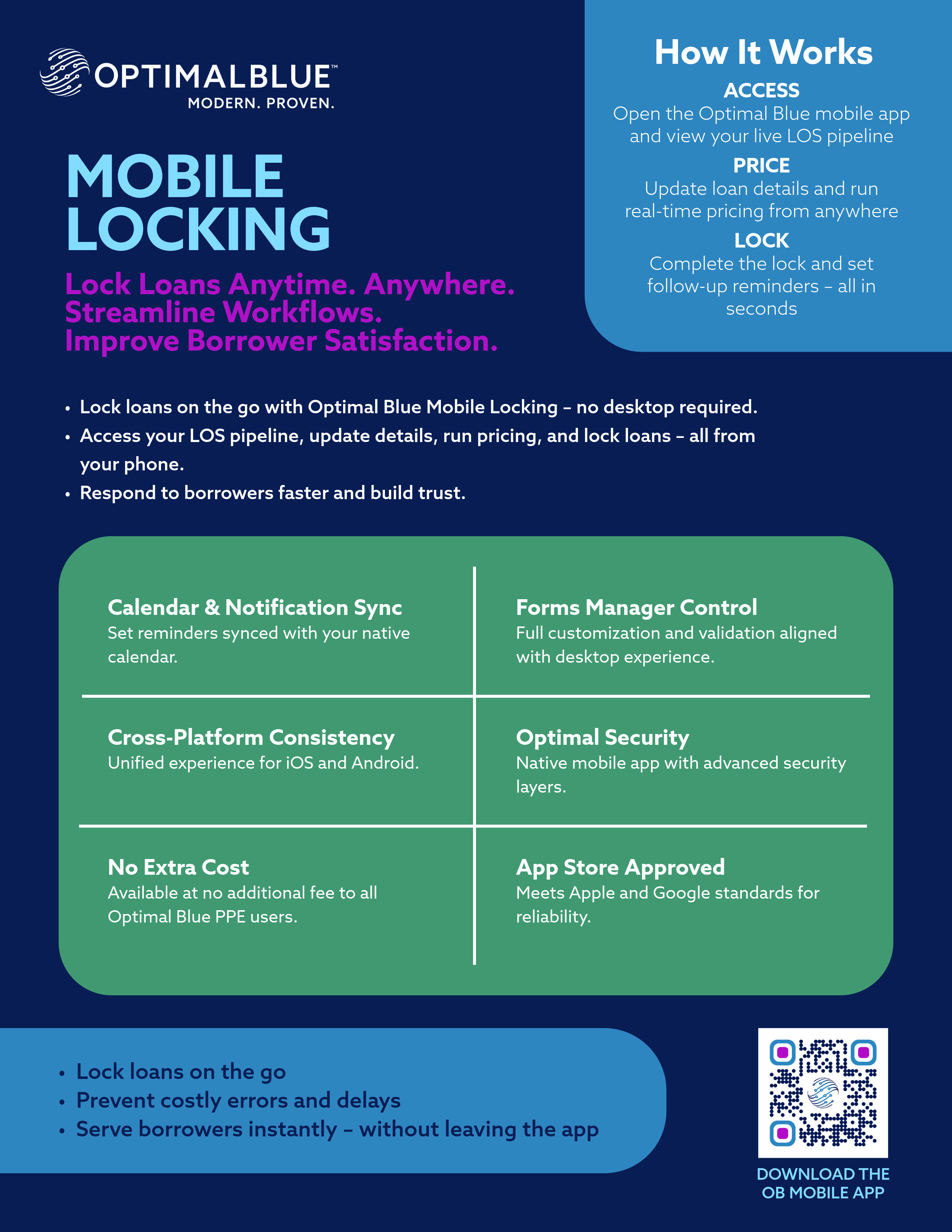
Download the Mobile Locking sheet
When originators can access their live pipeline and complete essential tasks on mobile, they can maintain momentum in borrower interactions.
Borrowers often reach out with questions about market movement or when they are ready to lock a rate. Without mobile access, originators may need to pause the conversation, return to a workstation, log into their LOS, and re-establish the borrower scenario. Mobile tools can reduce this friction by providing the same core information directly from a phone.
Originators can respond faster and borrower confidence increases as communication needs are met and issues are resolved with speed. When originators are equipped to review pricing, evaluate options, and proceed with a lock from their device, the entire experience becomes more aligned with borrower expectations.
The Importance of a Native Mobile Experience
While responsive websites can provide access to information, a native mobile application may offer a deeper and more secure experience. Native applications are built specifically for mobile systems, allowing them to leverage device-level capabilities designed to improve performance and reliability.
Key advantages of native mobile include:
On-device calculations that may support faster processing
Biometric authentication through face or fingerprint recognition
Secure storage of credentials through mobile passkeys
Integration with device features such as calendars, reminders, and notifications
Optimized performance tailored to iOS and Android environments
These capabilities help create a more cohesive workflow for originators. For example, the ability to set reminders for borrower follow-ups directly from the pipeline may help streamline daily activities. Native mobile widgets that display market indicators like Optimal Blue’s OBMMI can keep interest rate movements visible throughout the day.
As mobile usage continues to increase across the financial sector, the ability to incorporate the broader mobile ecosystem becomes an important differentiator for lenders seeking to modernize origination technology.
Security Considerations for Mobile Locking
Security remains a central priority for lenders evaluating mobile adoption. Modern mobile applications rely on the same secure infrastructure used for desktop environments, including encrypted APIs, identity management tools, and LOS connectivity frameworks.
Native mobile applications also undergo review by Apple and Google before being published or updated. These platforms evaluate the application to ensure compliance with their security and performance requirements. This third-party validation adds an additional layer of oversight that may reassure organizations introducing mobile workflows.
Because mobile locking uses the same LOS connectivity and pricing engine configuration as desktop workflows, lenders can maintain consistent governance across channels. Data integrity, user permissions, and lock controls follow the same rules regardless of whether the interaction takes place on mobile or desktop.
This supports an integrated approach to risk management, allowing lenders to adopt mobile capabilities without compromising existing security standards.
Configurable Control for Lender Governance
Many lenders are interested in mobile adoption but prefer to introduce functionality gradually. Modern mobile solutions support this approach by offering granular configuration options.
Administrators can decide:
Which users have access to mobile tools
Whether users can price, lock, or both
What fields appear on mobile forms
Which data points are read only
How forms align with LOS and PPE configuration
This helps lenders tailor the mobile experience to their internal policies and operational readiness. Some organizations begin with pricing-only access and later enable locking once originators are familiar with the mobile environment. Others adjust form visibility so that sensitive data remains within the LOS.
This controlled, incremental adoption path allows lenders to modernize confidently while maintaining oversight of mobile workflows.
How Mobile Locking May Enhance the Borrower Experience
Borrower expectations continue to shift toward real-time engagement. Mobile locking can support this trend by enabling originators to respond quickly to borrower inquiries, price scenarios during conversations, and proceed with decisions without delay.
Mobile workflows may help:
Reduce the time between quoting a rate and submitting a lock
Maintain engagement during time-sensitive decisions
Minimize the risk of missed opportunities due to timing
Support consistent communication during market volatility
When originators have the tools to respond immediately, borrowers may feel more assured throughout the process. This may support relationship building and reinforce confidence in the lender's process.
Mobile loan locking represents an important step in the evolution of mortgage operations. As lenders focus on speed, flexibility, accuracy, and borrower expectations, mobile-native tools can contribute meaningfully to a modern origination strategy. With secure connections to the LOS, configurable permissions, native integration with device features, and the ability to lock loans anytime, anywhere, mobile solutions may help lenders reduce friction and operate with greater agility.
To explore tools designed to support efficiency and modern lending workflows, visit OptimalBlue.com.
Download the OB Mobile App on iOS and Android
The views and opinions expressed in this piece are those of the author and do not necessarily reflect the views or positions of Optimal Blue, LLC.